

Views: 444 Author: kangli Publish Time: 2026-11-03 Origin: Site


Content Menu
● What makes a wheelchair suitable for high-frequency institutional use?
● 1. Match the wheelchair type to the transfer workflow
● 2. Evaluate frame and components for repeated handling
>> Look closely at the features staff use every day
● 3. Prioritize cleanability and disinfectant compatibility
>> Turn cleaning requirements into a procurement question
● 4. Check dimensions, user fit, and transfer access
● 5. Review maneuverability, brakes, and corridor handling
● 6. Consider maintenance, replacement parts, and fleet uptime
>> A simple fleet-readiness checklist
● 7. Clarify vehicle-transport requirements
● 8. Compare models using a procurement scorecard
● 9. Plan OEM customization without losing configuration control
● Before ordering: institutional buyer's checklist
● Work with an OEM partner on institutional wheelchair specifications
>> 1. What should hospitals prioritize when choosing transport wheelchairs?
>> 2. Are all hospital transport wheelchairs suitable for vehicle travel?
>> 3. What cleaning information should a supplier provide?
>> 4. Which dimensions should procurement teams compare?
>> 5. What does "high-frequency institutional use" mean in a specification?
>> 6. Can OEM buyers customize labels and manuals?
>> 7. Does an approved sample guarantee every production wheelchair will be identical?
*An institutional buyer's guide to durability, cleanability, maneuverability, maintenance, and OEM specifications*
Hospital transport wheelchairs are used in busy, shared environments where equipment may be moved between departments, patients, and storage locations throughout the day. For hospitals, clinics, rehabilitation centers, and care facilities, selecting a wheelchair for high-frequency institutional use means looking beyond purchase price. Buyers should assess cleanability, component durability, ease of handling, user fit, maintenance access, and the supplier's ability to provide consistent documentation and OEM support.
For international distributors and private-label brands, the most useful specification is one that reflects how the chair will actually be used. A wheelchair intended for short assisted transfers through hospital corridors may need a different configuration from one selected for long-term personal use or for occupied travel in a motor vehicle.
This guide outlines the key questions to ask before choosing or customizing transport wheelchairs for institutional customers.
How can I start an OEM partnership with your factory?
We recommend starting with an initial technical consultation to review your design specifications, target market, required functions, quantity, and customization needs.
Please contact our dedicated B2B team by email at Yukili90@tjkangli.com or chat with us directly on WhatsApp: +86 136 5207 7555.
WhatsApp:
Let’s build excellence together. Whether you need a quotation for a large-scale hospital project, want to develop a private-label product, or are exploring OEM/ODM opportunities for our 5-function medical bed series, our team is ready to support you from product selection and technical confirmation to production and delivery.
Visit www.klmedbed.com or contact us via WhatsApp to start your customized manufacturing project today.
A hospital transport wheelchair may be handled by multiple staff members and used by different people during a typical shift. This makes reliability, predictable operation, and straightforward cleaning important selection criteria.
Before reviewing models, define the use case:
- Who will push the wheelchair? Staff, caregivers, or both?
- How often will it be used? Occasional transfers or repeated daily movement?
- Where will it travel? Corridors, elevators, waiting areas, wards, or outdoor paths?
- Where will it be stored? At a ward station, shared equipment bay, or central store?
- Who will use it? Adults, children, or a defined range of user sizes?
- Is vehicle transport involved? If so, clarify whether the wheelchair will be used as a seat while the vehicle is moving.
These answers shape decisions about frame design, wheels, brakes, seating dimensions, surface materials, labels, and service planning.
> Procurement principle: Choose the model for the operational task and user group—not simply because it is labeled "hospital," "medical," or "heavy duty."
Many hospital transport wheelchairs are designed to be pushed by an attendant. They may have compact rear wheels and handles intended for staff-assisted movement. A self-propelled wheelchair, by contrast, is generally configured so the user can propel it using the rear wheels and hand rims.
The distinction matters when writing specifications and selecting a product for a facility. Confirm:
- Whether the chair is attendant-propelled or self-propelled
- Who is expected to operate it
- The intended setting and type of transfer
- Whether the user is expected to remain seated for extended periods
- Whether the chair needs to fold or fit into limited storage space
Do not assume a transport wheelchair is suitable for every journey merely because it can be pushed. If the use case includes travel in a moving vehicle, check that the specific model is designed and evaluated for that purpose. ISO 7176-19 addresses wheelchairs intended for use as seats in motor vehicles; it is not a blanket approval for all hospital transport wheelchairs. ISO transport wheelchair overview
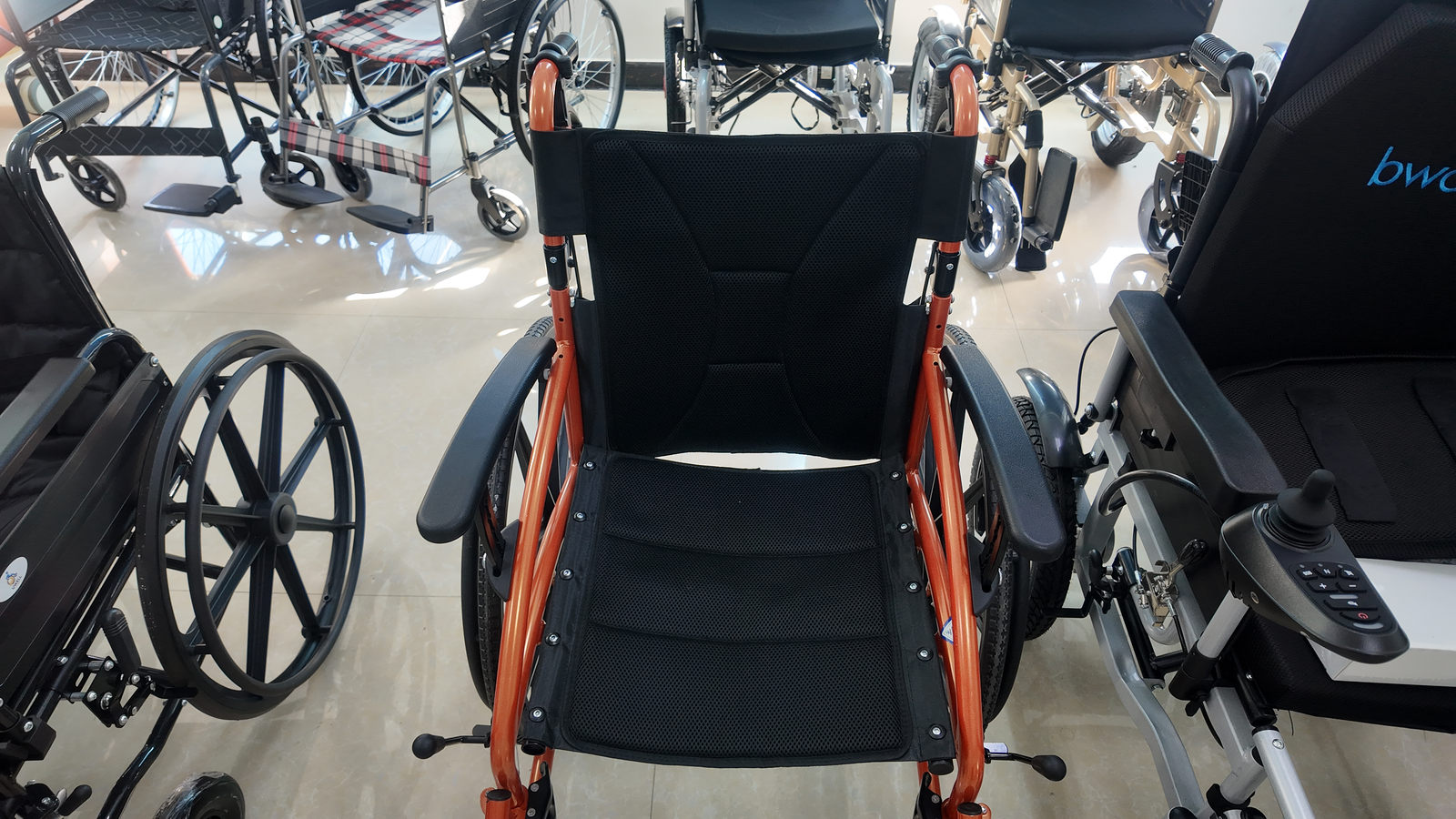
In shared-use environments, staff may repeatedly push, turn, park, fold, lift, or reposition the chair. Buyers should review the complete frame and component configuration rather than making a decision based on material alone.
Inspect or request details about:
- Frame material and construction
- Folding mechanism, if applicable
- Fasteners, joints, and visible finish
- Push handles and hand grips
- Rear wheels and front casters
- Brake design and operating position
- Armrests and footrests
- Replaceable or serviceable components
Ask the manufacturer to identify which specifications are standard and which are optional. For high-volume orders, confirm that replacement parts can be identified by model and configuration.
A sample review can reveal visible defects or operational concerns, but appearance alone cannot establish strength or long-term durability. Request product-specific technical documents and applicable test evidence. The ISO 7176 series covers different wheelchair-related requirements and test topics; the relevant parts depend on the chair type, configuration, and target market. ISO wheelchair standards guide
During sample evaluation, ask staff to operate the chair as they would during routine transfers. Observe whether the handles are easy to grip, whether brakes are accessible, and whether components are intuitive to use.
Record practical feedback such as:
- Is the chair easy to steer through a representative corridor?
- Can the operator apply and release the brakes without confusion?
- Are footrests easy to move or remove according to instructions?
- Are there loose parts, awkward edges, or unclear operating steps?
- Can staff identify the model and its instructions quickly?
Feedback should be collected under safe, controlled conditions and should not be treated as a substitute for technical testing or user-specific assessment.

Hospital wheelchairs are shared equipment. Buyers should review whether frequently touched surfaces can be cleaned using the facility's procedures and products.
CDC guidance states that manufacturers should provide a list of cleaning and disinfectant products compatible with the equipment, either in the instructions or upon request. CDC environmental cleaning procedures
When evaluating a wheelchair for institutional use, ask the supplier for:
- Cleaning and disinfection instructions
- Compatible cleaning agents or disinfectants
- Any concentration, contact-time, or rinsing requirements
- Materials or areas requiring special care
- Guidance for cleaning control points and frequently touched surfaces
- Instructions for inspecting the chair after cleaning
Review upholstery, seams, joints, handles, armrests, foot supports, and control areas for their suitability under the facility's cleaning routine. Do not assume that a material is compatible with every disinfectant. Compatibility should be confirmed against the manufacturer's instructions and the healthcare facility's infection-prevention procedures.
A practical procurement question is not just, "Is it easy to clean?" Ask:
1. What cleaning products does the manufacturer list as compatible?
2. Are there any products, methods, or materials to avoid?
3. Where can staff find the cleaning instructions?
4. How should the chair be checked for wear or damage after cleaning?
5. Who should the facility contact if the instructions are unclear?
Make sure the answers are documented and supplied in the language and format needed by the customer.
A transport wheelchair should fit the intended user group and the facility's workflow. Key dimensions may include seat width, seat depth, seat height, overall width, backrest height, and folded dimensions.
The buyer should specify:
- The expected user size range
- Any required seat-size options
- Whether armrests need to support side transfers
- Whether footrests should swing away, detach, or follow another configuration
- Whether the chair must pass through particular doorways or fit in elevators
- Whether folded storage is a priority
Ask for a dimensioned drawing and confirm how measurements are taken. ISO 7176-7 addresses measurement of wheelchair seating and wheel dimensions, offering a reference point for consistent dimensional discussions. Verify the applicable standards and measurement requirements for the specific product and market. ISO wheelchair standards guide
Avoid relying on descriptions such as "standard size" or "fits most users." Clear measurements help procurement teams compare models and help distributors create more accurate product information.
Hospitals may include narrow corridors, elevators, waiting areas, and crowded transfer points. A sample should be assessed in a representative environment when possible.
During a controlled review, check:
- Turning and steering behavior
- Caster movement and visible condition
- Brake engagement and release
- Stability during normal operation
- Ease of moving the chair in and out of storage
- Whether the chair's overall dimensions suit the facility's routes
The goal is to identify practical issues and confirm that operation matches the instructions. Do not perform improvised stress tests or treat a short handling trial as proof of safety or durability. Follow the manufacturer's instructions and seek qualified review where technical assessment is required.
For institutional buyers, serviceability can affect whether equipment remains available for use. A chair that is simple to identify, inspect, and maintain may be easier to manage as part of a shared fleet.
Ask the supplier:
- Which components are replaceable?
- How are parts identified by model and configuration?
- Are maintenance instructions available?
- What checks should staff perform before use?
- How should damaged or malfunctioning chairs be removed from service?
- What after-sales support can the manufacturer or distributor provide?
For bulk purchasing, consider a basic asset-management process. Each chair can be identified by model or asset label, with maintenance observations recorded according to facility policy. This is an operational suggestion—not a substitute for the manufacturer's maintenance instructions or local safety procedures.
Before placing a larger order, decide how the facility will manage:
- Product identification and inventory
- Routine visual checks
- Cleaning instructions
- Reporting of damage or faults
- Replacement-part requests
- Staff access to user instructions
A procurement specification that includes these operational details can be more useful than one that lists only frame material and seat width.

"Transport wheelchair" can mean a chair used to transport a person through a facility, or a chair intended to serve as a seat in a moving vehicle. These are not interchangeable claims.
If the wheelchair may be occupied during vehicle travel:
- Confirm the exact wheelchair model and configuration.
- Ask whether it is designed and evaluated for use as a motor-vehicle seat.
- Review relevant test documentation and instructions.
- Confirm the required tie-down and occupant-restraint system.
- Check destination-market requirements with the responsible compliance team.
ISO 7176-19 applies to wheelchairs intended for use as seats in motor vehicles. It should not be cited as proof that an ordinary hospital transport wheelchair is suitable for vehicle travel. ISO transport wheelchair overview University of Michigan Wheelchair Transportation Safety: ISO Standards
A structured scorecard helps purchasing teams compare suppliers consistently and document why a model was selected.
| Evaluation area | Questions to document |
|---|---|
| Intended use | Attendant-pushed, self-propelled, or another defined use? |
| User fit | Which seat dimensions and user group does the model serve? |
| Handling | Does the sample suit the facility’s transfer workflow? |
| Cleanability | Are compatible cleaning products and instructions documented? |
| Components | Are brakes, wheels, armrests, and footrests clearly specified? |
| Maintenance | Are parts, service instructions, and support available? |
| Documentation | Do records correspond to the exact model and configuration? |
| Vehicle use | Is vehicle-seat use intended and supported by relevant evidence? |
| OEM options | Are branding, labels, manuals, and packaging available as required? |
Use the same questions for each supplier. This makes comparisons more meaningful than relying on price or product descriptions alone.
International brands and distributors may need private-label branding, translated manuals, market-specific packaging, or selected configuration options. These requests should be reviewed before production.
Potential OEM discussion points include:
- Logo placement and application method
- Model naming and SKU structure
- Frame or upholstery color options
- User manual language
- Product and carton labels
- Included accessories
- Spare parts and service documentation
Keep a record of the approved model revision and any changes. If a request affects the wheelchair's construction, components, or intended use, ask the manufacturer whether a revised sample, document update, or further review is needed.
Before approving a model or placing a bulk order, confirm that:
- The wheelchair's intended use is clearly stated.
- The proposed configuration matches the facility's transfer workflow.
- Dimensions and user-fit information are documented.
- Brakes, wheels, handles, armrests, and footrests have been reviewed.
- Cleaning instructions and compatible products are available.
- Maintenance and replacement-part information has been discussed.
- Vehicle-use claims, if any, are supported for the exact model.
- OEM artwork, labels, manuals, and packaging are approved.
- The supplier's product documents match the quoted configuration.
- The buyer and supplier have agreed on inspection and change-control steps.
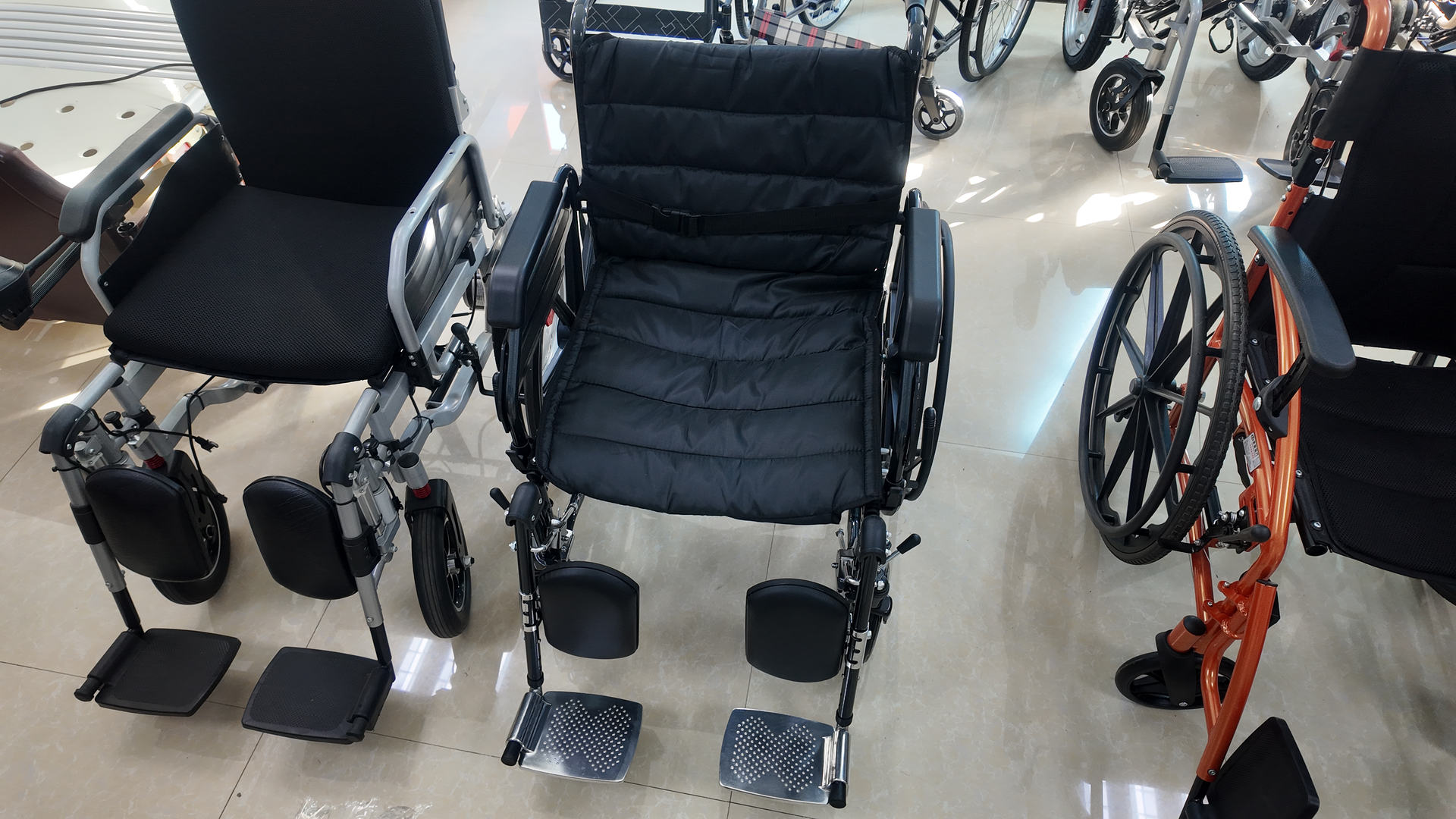
A successful institutional wheelchair project starts with a clear use case. Share the intended facility, frequency of use, user group, cleaning procedures, dimensions, branding requirements, and destination market with the manufacturer before sample approval.
Tianjin Kangli Medical Device provides OEM services for international brands, wholesalers, and manufacturers. Contact our team to discuss hospital transport wheelchair models, review configuration options, and prepare a product specification for your institutional customers.
Start with intended use, user fit, cleanability, maneuverability, maintenance needs, and documentation. The priorities depend on the facility's workflows and users.
No. A chair used for movement inside a facility is not automatically designed to serve as a seat in a moving vehicle. Confirm the specific model's intended use and relevant evidence.
Ask for written cleaning and disinfection instructions, including compatible products and any restrictions. CDC guidance recommends that manufacturers make compatible cleaning-product information available. CDC environmental cleaning procedures
Common measurements include seat width and depth, seat height, overall width, backrest height, and folded dimensions. Use consistent measurement definitions and request a dimensioned drawing.
Define it through the facility's actual workflow: who operates the chair, how often it is used, where it travels, and how it is cleaned and stored. Avoid relying on an undefined "heavy-duty" label.
Often, buyers can discuss branding, model identification, packaging, and manual language with the manufacturer. Confirm feasibility, destination-market requirements, and approval steps before production.
No. Sample approval sets a reference configuration. Buyers should also agree on production controls, inspection criteria, and how later changes or substitutions will be approved.
CDC, Environmental Cleaning Procedures — Guidance on environmental cleaning procedures and manufacturer information about compatible cleaning and disinfectant products.
ISO/TC 173, Wheelchair and Wheelchair Seating Standards Reference Guide — Overview of wheelchair standards, including measurement and testing topics in the ISO 7176 series.
ISO 7176-19 / WC19: Wheelchairs Intended for Use as Seats in Motor Vehicles — Explains the scope of ISO 7176-19 and distinguishes wheelchair standards from vehicle tie-down and occupant-restraint system standards.
University of Michigan Wheelchair Transportation Safety, ISO Standards — Educational overview of standards related to wheelchair transportation safety.
Editorial note: This article provides general procurement guidance. It does not replace product-specific engineering, clinical, infection-prevention, or regulatory review. Confirm requirements for the exact wheelchair configuration and destination market.


